
Building Foundations for Lifelong Learning
What if we told you that something as simple as owning books can give your child a brighter future?
Research consistently shows that children who grow up with owned books tend to do better in school and throughout their lives. Each additional book in a household correlates with improved learning outcomes, enhanced problem-solving abilities, and greater academic success—a relationship that holds across diverse socioeconomic backgrounds worldwide.
While libraries and book-lending programmes play a vital role in providing access to diverse reading materials, research shows that book ownership offers unique benefits. When children have books they can keep, they develop deeper familiarity with texts, returning to favourite stories multiple times and building both reading confidence and comprehension skills. Both owned and borrowed books contribute to literacy development, but they serve complementary roles in creating rich reading environments.
In South Africa, 43% of households report having no books in the home (UNICEF, 2023). This statistic reveals a significant educational gap affecting nearly half our population, creating disadvantages that compound over time and impact not only immediate literacy skills but also long-term academic and professional prospects.
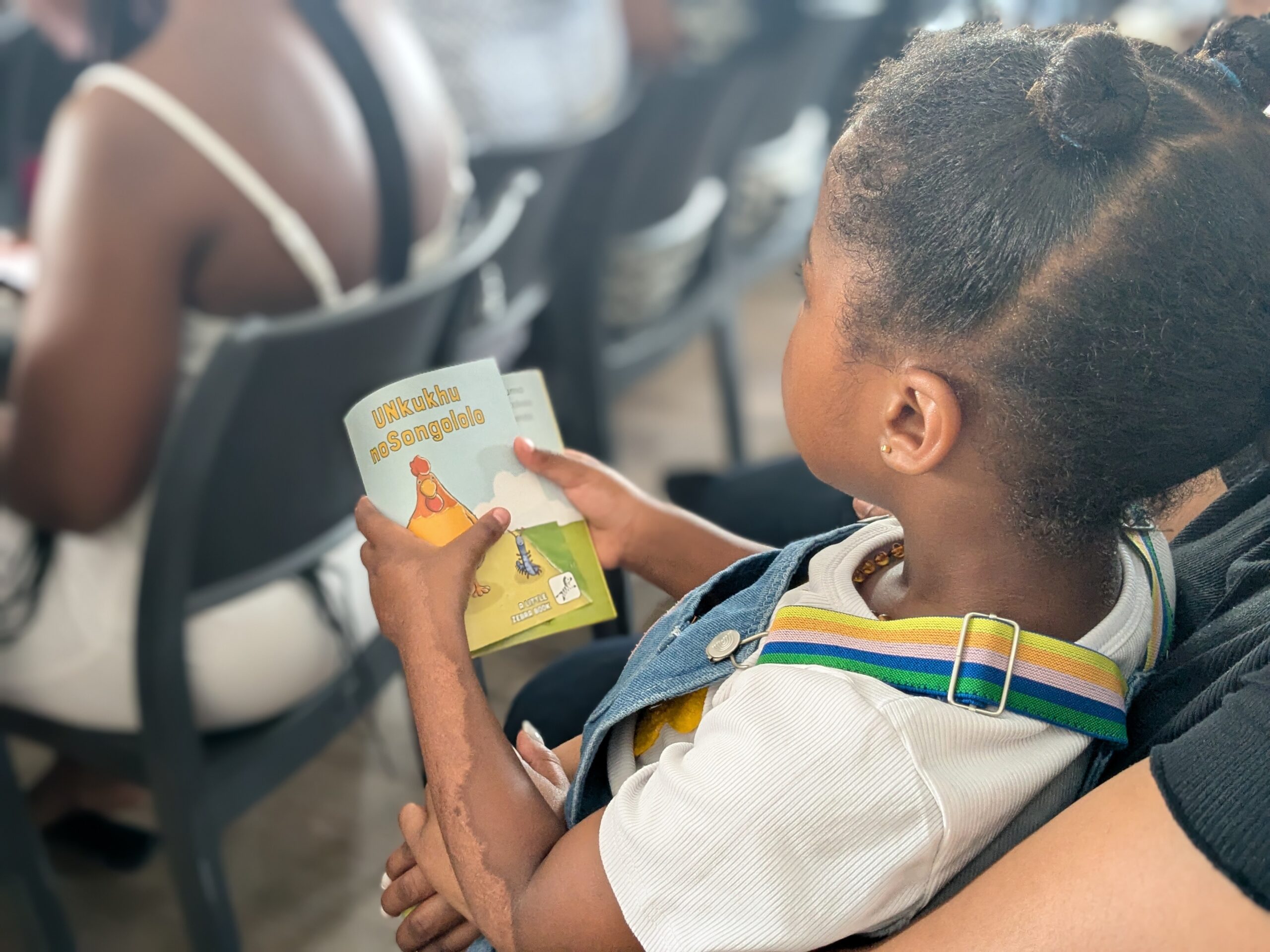
At a recent parent meeting, our Community Facilitator heard a powerful example of why ownership matters. One mother shared that her daughter’s favourite book is Thembi’s Family. Their family had just welcomed a new baby, and the little girl was thrilled to see a baby in the story that reflected her own life. Every night, she asks her mom to read it before bed and proudly shows it to every guest who visits their home. For this child, Thembi’s Family is a treasured possession, a mirror of her world, and a source of joy and pride.
Through our Masifunde Sidlala project, Little Zebra Books addresses this challenge by providing ten carefully selected books annually to children in our partners’ programmes. The evidence suggests that substantial collections aren’t necessary—a small number of well-chosen books that children can access freely and repeatedly provides the foundation for improved literacy, enhanced cognitive development, and greater educational achievement. Through sustained partnerships and targeted distribution, we work to ensure more South African children access the educational advantages that book ownership provides.