
by Robyn Beere, Managing Director, Little Zebra Books
If we are serious about addressing South Africa’s reading crisis, we must look beyond the classroom. Our public schooling system is under immense pressure. In many underserved communities, high learner–teacher ratios, limited infrastructure and insufficient learning materials mean that children who fall behind struggle to catch up. For too many learners, the school day ends without the individual support they need to thrive.
But the challenge does not end at the school gate. In communities affected by poverty, violence and substance abuse, children often return home to environments that are not conducive to learning. There may be no quiet space to read, limited adult supervision, and few, if any, books in the home. When structured activities are unavailable after school, children are left vulnerable during the very hours when learning gains are most fragile.
This is where After-School Programmes (ASPs) play a vital, and often under-recognised, role. ASPs are frequently described as safe spaces. And they are, as they provide protection, nourishment, mentoring and belonging. But they are also something more: they are flexible learning environments uniquely positioned to support literacy development.
Unlike formal schooling spaces, ASPs are not bound by the same curriculum pressures and administrative constraints. They have the freedom to innovate, to respond to individual needs, and to build relationships that support learning in deeply personal ways. Smaller groups allow practitioners to notice when a child is struggling with reading. Informal settings reduce performance anxiety. Time can be given to practice, to repetition, and to encouragement.
Most importantly, after-school spaces can nurture reading for enjoyment, not only reading for assessment. In after-school spaces, reading can become relational, joyful and imaginative. It can be the moment in the day when a child experiences success. It can be the spark that builds confidence. It can be the story that travels home and is retold to siblings.
ASPs are uniquely placed to build a culture of reading. They can prioritise mother-tongue reading, which research consistently shows is foundational to literacy development. They can create shared reading moments that build vocabulary and comprehension.
And yet, while ASPs carry enormous potential, they operate under significant constraints. Many programmes function with limited funding, minimal learning materials and overstretched staff. Books are often scarce. Practitioners are passionate but may not have access to consistent literacy resources or professional support. If we want ASPs to play a meaningful role in improving reading outcomes, we must resource them accordingly.
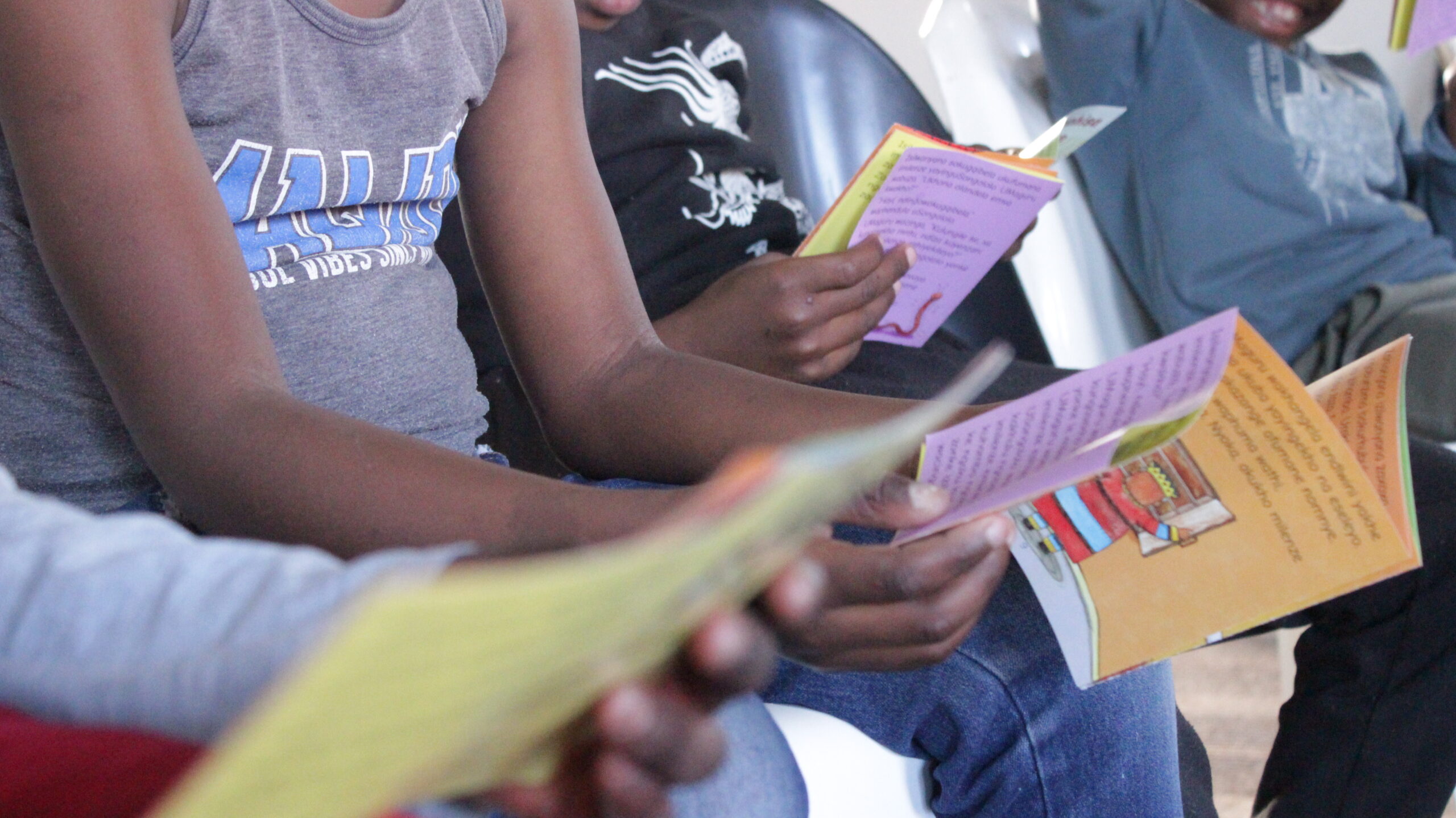
At Little Zebra Books, through our Masifunde Sidlala programme, we partner with ASPs by providing monthly storybooks for shared reading, along with small-format books that children can own and take home. The aim is not simply to add an activity, but to help build a reading culture within the programme and beyond it.
One ASP partner noted, “Your initiative has helped create a genuine love for reading among our kids. The children look forward to each new book every month with so much excitement. Your stories spark their curiosity, grow their imagination and open doors to learning.”
Alongside providing books, we host monthly Community of Practice meetings for ASP practitioners. Literacy development is not simply about access to materials; it is about building practitioner confidence and capacity.
What we’ve seen is that when access to books becomes consistent and when practitioners feel equipped and supported, reading shifts from being occasional to being embedded meaningfully into their programmes.
As the after-school sector continues to grow and professionalise, there is an opportunity to reframe how we see its role in education reform. ASPs are not peripheral. They are not merely “gap fillers.” They are an essential layer in the learning ecosystem, strengthening what happens in classrooms and supporting what learners face outside them.
If we want to see meaningful improvement in reading outcomes, we must support the spaces where children have time to practice, to explore, to fail safely and to try again. We must invest not only in formal schooling, but in the hours beyond it.
Because sometimes, it is in those quieter, after-school moments — sitting together with a story that a lifelong reader is formed.